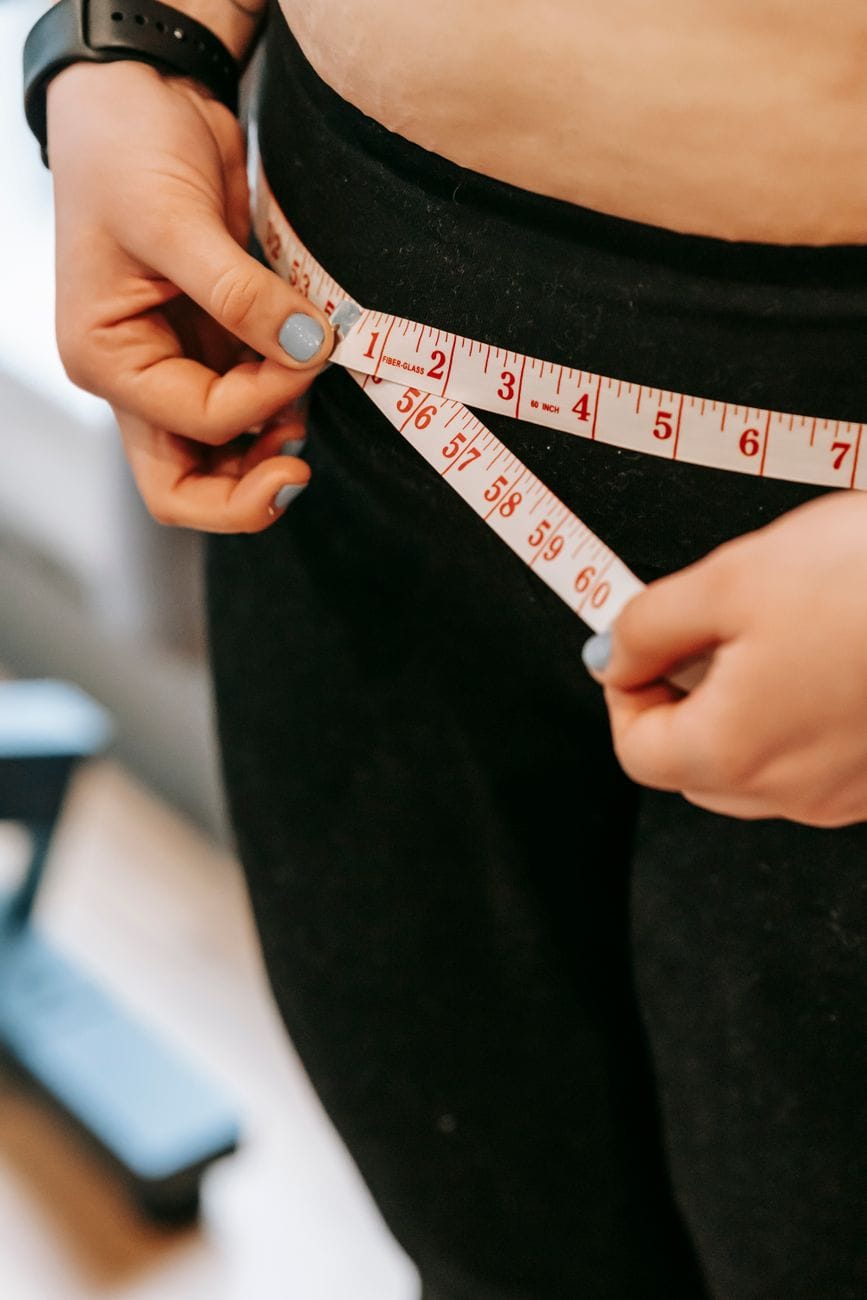
For someone already lean, the highest-return combination is high protein, a small deficit, lifting, and good sleep.
But, if you’re like me and want to optimize fat loss, read on.
Lipolysis vs Fat Loss
One distinction first: lipolysis (releasing fat from fat cells) isn’t the same as fat loss. Caffeine, fasting, and fasted cardio all raise lipolysis acutely, but without an energy deficit those fatty acids just get stored again. Net fat loss over weeks is what counts, so everything below is judged on that.
Nutrients with real support
- Protein (1.6–2.2 g/kg/day, higher end if you’re lean). The strongest “supplement” there is: highest thermic effect of any macronutrient, most satiating, and protects muscle so the weight you lose is actually fat. Spread it over 3–4 meals with ~0.4 g/kg each.
- Caffeine. Genuinely increases lipolysis and fat oxidation, raises energy expenditure by a few percent, and blunts appetite. Effect shrinks with daily tolerance.
- Fiber (25–40 g/day, especially soluble). Slows gastric emptying, improves satiety and glycemic response. Psyllium or whole foods; glucomannan has modest trial support.
- Creatine. No direct fat effect, but it preserves training output in a deficit, which preserves muscle, which is the whole game when you’re already at a healthy weight.
Nutrients with modest or conditional support
- Berberine. Improves insulin sensitivity and produces small weight/fat reductions in people with metabolic dysfunction. Minimal evidence in lean, healthy people. GI side effects and drug interactions, so worth care.
- Omega-3 (EPA/DHA). Small effects on fat mass in some trials, mostly in overweight populations. Worth taking for other reasons; don’t expect fat loss.
- Vitamin D. Correcting a deficiency improves metabolic markers; supplementing when replete does nothing for fat.
- MCT oil. Slightly higher thermogenesis and satiety than long-chain fats, but it’s still 100+ calories per tablespoon, so it rarely nets out positive.
- Green tea catechins. Inhibit catechol-O-methyltransferase, prolonging norepinephrine’s lipolytic signal. Real but small, and mainly with caffeine.
- L-carnitine. Required for fatty acid transport into mitochondria, but you already make plenty. Helps mainly in vegans, older adults, or the deficient.
- Probiotics, chromium, ALA, apple cider vinegar. Occasional positive trials, inconsistent, effects around a kilogram or less when present.
Lipolysis Stacks
Lipolysis stacks (acute fat mobilization and oxidation)
- Caffeine, pre-exercise: 3 mg/kg before cardio raises maximal fat oxidation during exercise. This is the simplest evidence-backed lipolytic tool [2, 3].
- Caffeine and green tea catechins: the combination raises 24-hour energy expenditure by about 4% and shifts fuel use toward fat, more than caffeine alone at matched doses [4]. Keep EGCG under about 338 mg/day from extracts, due to liver-injury risk at higher bolus doses [5].
- Yohimbine, fasted, with caffeine: yohimbine blocks alpha-2 receptors and increases fatty acid release [6]. Insulin suppresses lipolysis, which is why practitioners take it fasted [7]. One 21-day trial in athletes found a drop in body fat percentage [8]. Label content is unreliable, with products found to contain pharmaceutical quantities or inaccurate doses [9]. Side effects include anxiety and raised blood pressure.
Remember: Lipolysis alone is not Fat Loss
The key caveat is that mobilizing fat acutely does not produce more fat loss over weeks. Fasted and fed cardio produce the same body composition changes when calories are matched [10].
Fat Loss Stacks
Fat loss stacks (net fat loss over weeks)
- High protein and creatine with resistance training: this is the strongest stack. Protein at about 1.6 g/kg/day increases lean mass gains with lifting [11], and in a deficit, 2.4 g/kg/day produced more fat loss and lean mass gain than 1.2 g/kg/day [12]. Protein also has the highest thermic effect of the macronutrients [13]. Creatine at 3–5 g/day [14], combined with lifting, has shown small reductions in body fat percentage in a meta-analysis of older adults [15].
- Protein and viscous fiber: this is the appetite-control stack. Protein is the most satiating macronutrient [16], and viscous fibers reduce appetite more reliably than non-viscous ones [17]. Glucomannan trials are mixed, with one meta-analysis finding a small weight reduction and another finding none [18, 19].
- Caffeine and green tea extract, daily: as a chronic stack, catechins with caffeine produce modest reductions in weight and waist circumference, while catechins alone do not [20, 21].
- MCT oil replacing other fats: substituting MCT for long-chain fats produced about 0.5 kg more weight loss and 0.4 kg more fat loss in a meta-analysis, so the effect is small [22].
Sleep is Key for Fat Loss (Likely GH related)
One non-supplement fact that outweighs all of these: in a controlled trial, dieters sleeping 5.5 hours lost 55% less fat than those sleeping 8.5 hours on the same calories, and lost more lean mass [23].
Fat Loss Diet Strategies that Get There
- Small deficit, slow rate. At a healthy weight, aim for ~0.5% of body weight per week (300–500 kcal/day deficit). Larger deficits lose muscle in lean people.
- Track for two weeks. Most people underestimate intake by 20–40%. You don’t need to track forever, just long enough to calibrate.
- Eat minimally processed. The NIH inpatient study (Hall 2019) found people ate ~500 kcal/day more on ultra-processed diets with matched macros, simply from palatability and eating rate.
- Low energy density, high volume. Vegetables, fruit, potatoes, soups, lean protein. Volume and water content drive fullness more than calorie count does.
- Protein first in each meal. Improves satiety and blunts the glucose response of the rest of the meal.
- Cut liquid calories and limit alcohol. Alcohol suppresses fat oxidation for hours because your liver prioritizes clearing it.
- Time-restricted eating if it helps you. It works by reducing intake, not through a metabolic shortcut. Head-to-head trials show no advantage when calories are matched, but some people find it easier to adhere to.
- Fasted cardio. This is only good, if you need insulin control. It burns more fat during the session, but 24-hour fat loss is identical in controlled studies. Do it if you like it; no need otherwise.
- Low-carb vs. low-fat. Equal fat loss when protein and calories are matched. Pick what you’ll stick to.
- Diet breaks. Two weeks at maintenance every 4–8 weeks preserved more lean mass and improved long-term results in the MATADOR trial, and it helps psychologically.
- Water before meals. About 500 mL before a meal reduced intake in trials; cheap and harmless.
Non-diet levers that matter more than any supplement
- Resistance training 3–4×/week.
The signal that tells your body to keep muscle and drop fat. - Sleep 7–9 hours.
In a controlled trial, sleeping 5.5 vs. 8.5 hours on the same deficit cut fat loss by more than half and doubled lean mass loss. - Daily steps.
NEAT often drops unconsciously during a deficit; a step floor (8–10k) prevents that.
Overrated for Fat Loss
- Fasted cardio: you burn more fat during the session but lose no more fat over time when calories are matched.
- Keto vs. low-fat: the results are equal when calories and protein match, so pick the one you can stick to.
- Apple cider vinegar, omega-3s, L-carnitine, and cold exposure: the effects on fat loss are negligible or unreliable.
Facts, Claims, and Research Base
Facts and claims
- Medications are indicated for a BMI of 30 or higher, or 27 or higher with weight-related conditions, and should never be taken only to change appearance. Source: NIDDK, “Prescription Medications to Treat Overweight & Obesity,” last reviewed June 2024 (attached document).
- Caffeine at 3 mg/kg increases maximal fat oxidation during exercise. Source: Ramírez-Maldonado M, et al. J Int Soc Sports Nutr. 2021;18(1):5.
- Caffeine intake is associated with reductions in weight, BMI, and body fat in a dose-response meta-analysis. Source: Tabrizi R, et al. Crit Rev Food Sci Nutr. 2019;59(16):2688–2696.
- Green tea extract with caffeine increases 24-hour energy expenditure by about 4% and fat oxidation, more than matched caffeine alone. Source: Dulloo AG, et al. Am J Clin Nutr. 1999;70(6):1040–1045.
- A safe intake level of 338 mg EGCG/day from solid extracts was identified, with hepatotoxicity reported at higher doses. Source: Hu J, et al. Regul Toxicol Pharmacol. 2018;95:412–433.
- Oral yohimbine increases plasma free fatty acids and glycerol in healthy men. Source: Galitzky J, et al. Eur J Clin Invest. 1988;18(6):587–594.
- Insulin suppresses lipolysis and free fatty acid release at low physiological concentrations. Source: Campbell PJ, et al. Am J Physiol. 1992;263(6 Pt 1):E1063–E1069.
- Yohimbine 20 mg/day for 21 days reduced body fat percentage in soccer players versus placebo. Source: Ostojic SM. Res Sports Med. 2006;14(4):289–299.
- Yohimbine supplements often contain inaccurate or pharmaceutical-level doses. Source: Cohen PA, et al. Drug Test Anal. 2016;8(3–4):357–369.
- Fasted and fed aerobic exercise produce no difference in fat loss when calories are matched. Source: Schoenfeld BJ, et al. J Int Soc Sports Nutr. 2014;11:54.
- Protein supplementation augments lean mass gains with resistance training, with benefits plateauing around 1.6 g/kg/day. Source: Morton RW, et al. Br J Sports Med. 2018;52(6):376–384.
- In an energy deficit with intense exercise, 2.4 g/kg/day protein produced greater lean mass gain and fat mass loss than 1.2 g/kg/day. Source: Longland TJ, et al. Am J Clin Nutr. 2016;103(3):738–746.
- The thermic effect is about 20–30% for protein, 5–10% for carbohydrate, and 0–3% for fat. Source: Westerterp KR. Nutr Metab (Lond). 2004;1(1):5.
- Creatine monohydrate at 3–5 g/day is the standard maintenance dose. Source: Kreider RB, et al. J Int Soc Sports Nutr. 2017;14:18.
- Creatine with resistance training produced small reductions in body fat percentage in adults 50 and older. Source: Forbes SC, et al. J Funct Morphol Kinesiol. 2019;4(3):62.
- Protein is the most satiating macronutrient. Source: Halton TL, Hu FB. J Am Coll Nutr. 2004;23(5):373–385.
- Viscous fibers reduce appetite more consistently than non-viscous fibers. Source: Wanders AJ, et al. Obes Rev. 2011;12(9):724–739.
- Glucomannan produced a small reduction in body weight in a meta-analysis. Source: Sood N, et al. Am J Clin Nutr. 2008;88(4):1167–1175.
- Glucomannan showed no significant effect on body weight in a separate meta-analysis. Source: Onakpoya I, et al. J Am Coll Nutr. 2014;33(1):70–78.
- Green tea catechins with caffeine modestly reduce weight, BMI, and waist circumference, while catechins alone do not. Source: Phung OJ, et al. Am J Clin Nutr. 2010;91(1):73–81.
- Green tea catechins with caffeine produce a small effect on weight loss and maintenance. Source: Hursel R, et al. Int J Obes (Lond). 2009;33(9):956–961.
- Replacing long-chain triglycerides with MCT produced about 0.51 kg more weight loss and 0.39 kg more fat mass loss. Source: Mumme K, Stonehouse W. J Acad Nutr Diet. 2015;115(2):249–263.
- Sleeping 5.5 hours versus 8.5 hours during calorie restriction reduced the proportion of weight lost as fat by 55% and increased lean mass loss. Source: Nedeltcheva AV, et al. Ann Intern Med. 2010;153(7):435–441.